I didn’t reflect on last week’s session.
We had group crits, which I always found incredibly painful during my BA, mostly because we would all stand around each other’s work in tar-y, uncomfortable silence. Quite frankly, it only reinforced these weird ideas that frequently circulated in my mind at that time: that I was accidentally dropped onto this planet, and no one has the foggiest idea what I’m talking about because I am a Martian.
Luckily, that wasn’t my experience this time round, so that didn’t contribute to my reluctance to reflect on last week’s session.
I was just tired, and when I’m tired, it’s extra graft to string a sentence together, let alone inhabit the realm of higher cognitive thinking. Plus, when drained, the inner teenager in me puts porcupine quills in her ears (flesh tunnels that I’m now regretting in later life), steals her mum’s mascara, puts on her Dr Martens, digs her heels in and mumbles half-replies.
So now, while writing a post about not wanting to reflect, I will do my best to reflect:
As always, it is a pleasure and a privilege to learn more about the fellow artists on my course, their lives and artistic practices.
Sil, John, Kevin and I entered another one of these strange little liminal spaces, or breakout rooms, online, and took turns speaking about our work. Afterwards, we asked one another a series of questions about how we currently felt about the pieces we were working on, followed by questions to consider, or to help us reflect on, which directions we might explore further.


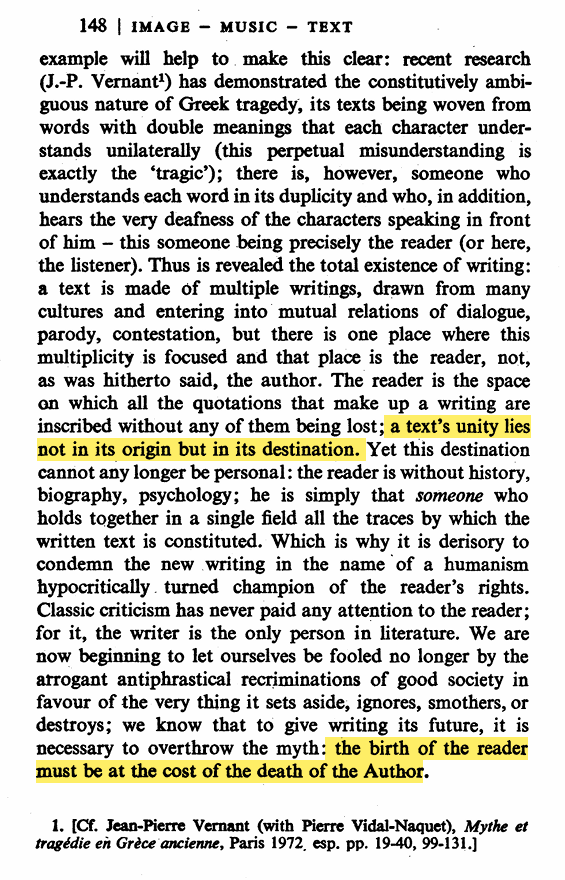
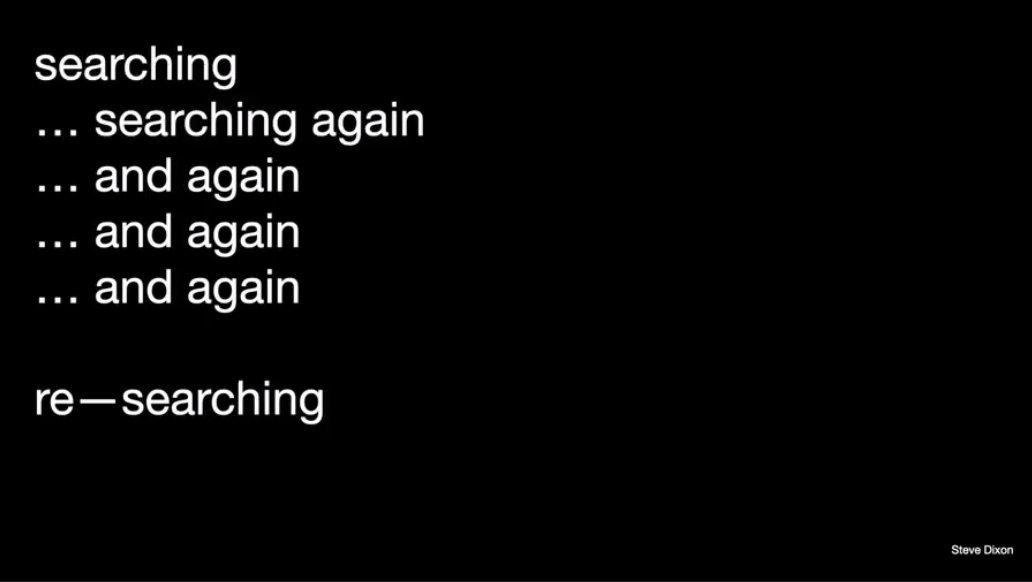
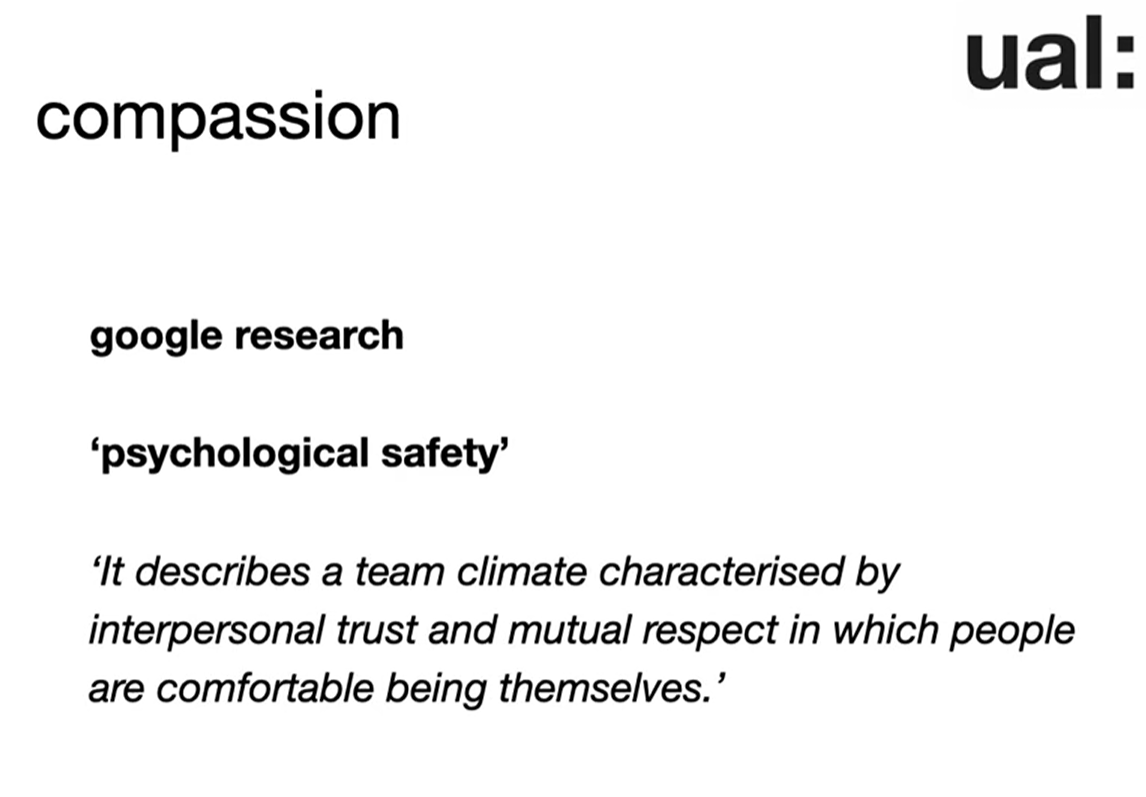
I wanted to include these screenshots from the lecture, which Jonathan introduced prior to sending us off into the wonderful liminal world of the breakout rooms.
I think something incredibly powerful happens in the exchange when human beings give generously of their attention to one another. To be seen, heard and accepted. For others to be curious about your work, whether they find it aesthetically pleasing or not, is affirming.
The group crit was an encounter where curiosity took precedence over judgement. In these sorts of spaces, where kindness and attention are cultivated, another person’s perspective can help us recognise something in our own work that we hadn’t previously seen.
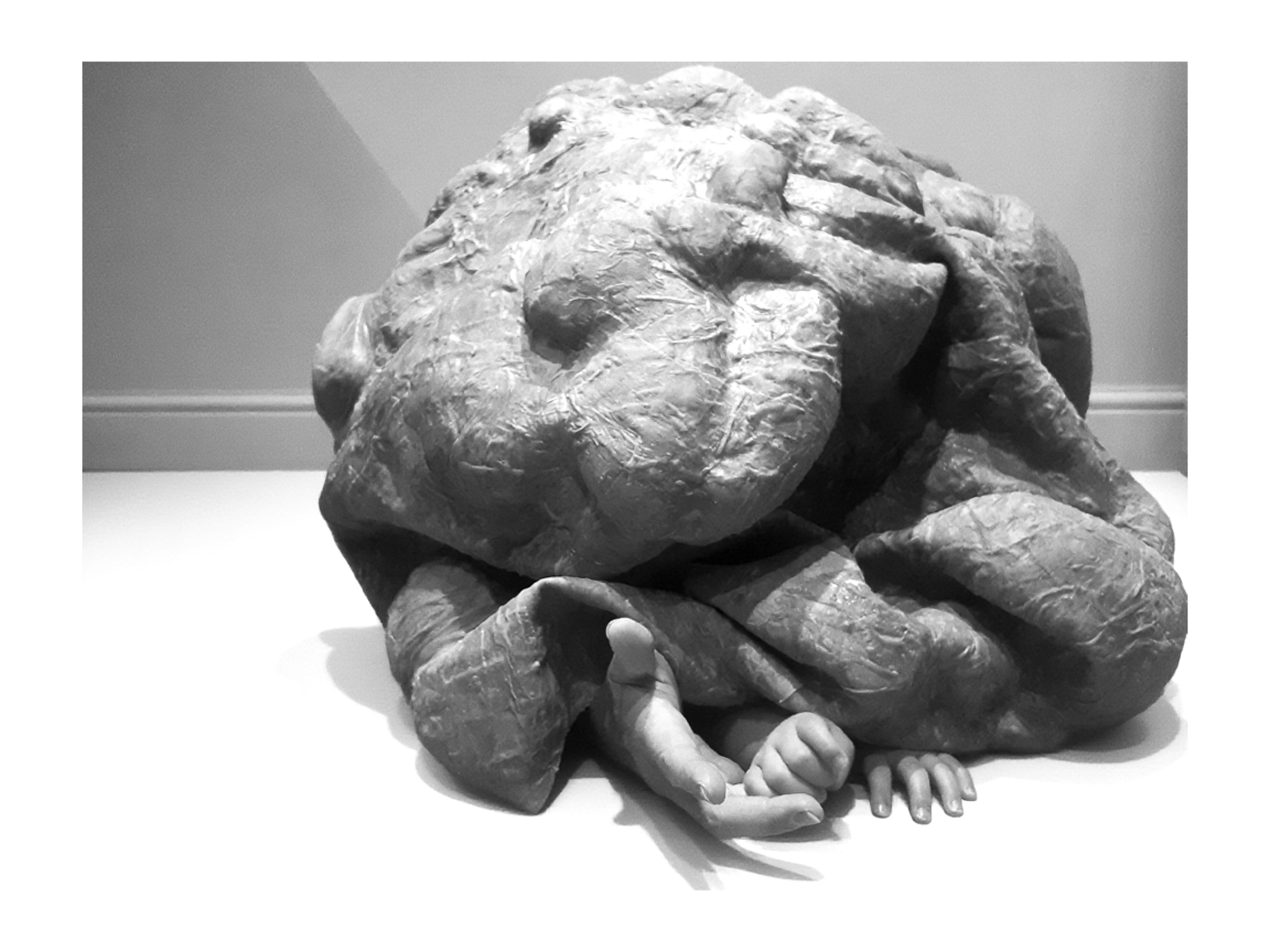
One question that stayed with me was Sil asking why I use cheesecloth when working with latex.
And do you know what? I didn’t really have an answer. I think I said something about reinforcing the structural integrity of the latex, which is true, but I realised that I hadn’t really considered why I’d chosen it in the first place.
Reflecting on it now, I’ve always felt that there’s something sinewy or vascular about the fibres of cheesecloth. When combined with latex, the fabric gives the surface a texture that makes it feel even more bodily. So perhaps my choice wasn’t entirely practical after all. There was something about the material that I was already responding to, even if I hadn’t consciously articulated why.
It’s interesting how certain decisions become part of our making without us necessarily questioning them. Sometimes they’re practical, sometimes intuitive, and sometimes we simply return to something because it works.
Perhaps this is precisely the value of these exchanges. Someone else can ask a seemingly simple question that opens up an entirely new direction of enquiry.
I think the biggest takeaway was that we are all on this journey, encountering an endless process of nows. And each now reveals more questions, which lead to some answers that inevitably lead to more questions, and so forth.
On the surface, that could be seen as complicating matters, but we are researchers (look, mum, I’m a researcher!), and it would be brazen to think, as artists and as humans, that learning will ever be done. After all, even what we hold to be true can be subject to revision.
We’ll get to have many opportunities for wonderful conversations along the way.
I think that’s all I’ve got for now. My inner teenager has just come home smelling of cigarettes.
Key points…
- Group crits as spaces for exchange and discovery.
- The importance of curiosity, kindness and attention.
- Learning through the perspectives of others.
- Questioning familiar material choices.
- The relationship between intuition, material and meaning.
- The bodily qualities of cheesecloth and latex.
- Making as a process of questioning and discovery.
- Research as an ongoing process of learning.
- The relationship between questions, answers and further questions.
- Revisiting and reconsidering what we hold to be true.
- The value of conversation in artistic practice.